Build number sequence fluency
Adjacent numbers differ by 1 across a row, supporting before-and-after numbers and counting in sequence.
Elementary math · Number patterns to 100
Start with a complete number chart from 1 to 100, then use missing-number practice to understand horizontal, vertical, and neighboring number patterns. Designed for short, focused practice beyond the classroom.
Practice focus
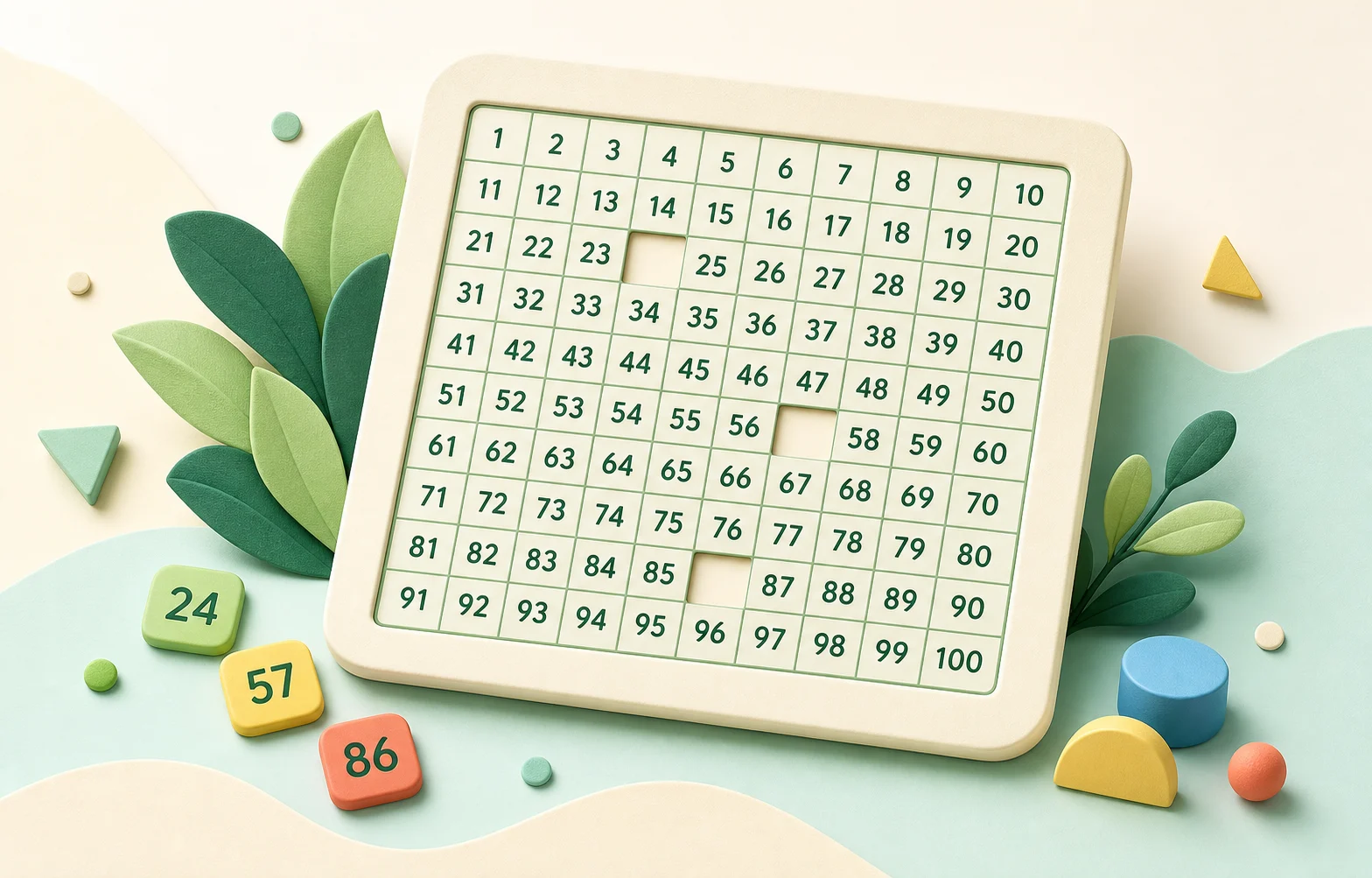
A hundreds chart is more than a counting list. Position, rows, columns, and missing cells help children build an intuitive model of our base-ten number system.
Adjacent numbers differ by 1 across a row, supporting before-and-after numbers and counting in sequence.
Numbers differ by 10 down a column, making changes in the tens place easy to see.
Children infer empty cells from a known number, practicing observation, logic, and addition or subtraction within 100.
Inside a practice session
Children often need room to notice a pattern, try an answer, and make a correction without feeling rushed.
Changing number combinations build familiarity with the pattern, not a memorized answer.
An incorrect cell is marked right away, leaving time to look again and self-correct.
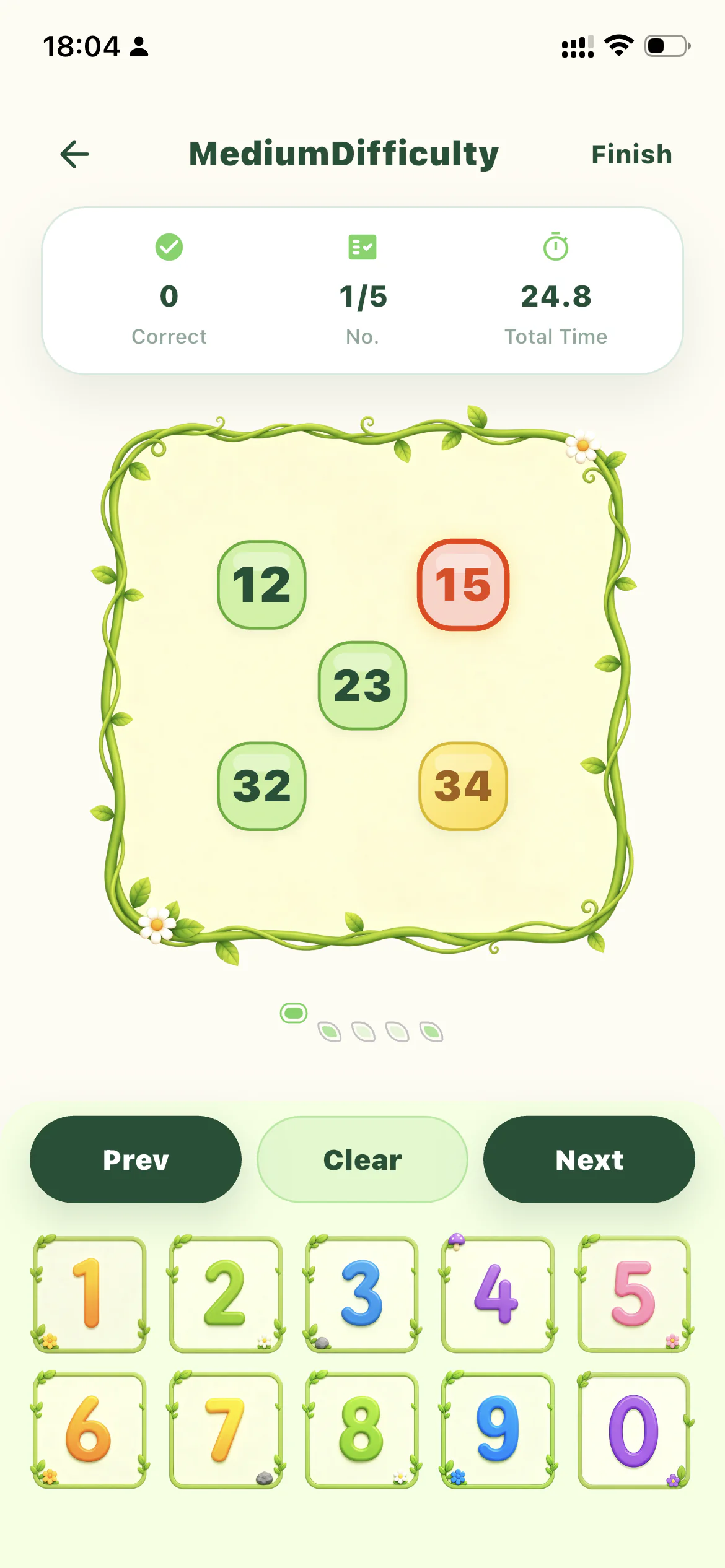
Previous, Clear, and Next controls keep each short practice session easy to follow.
Complete number chart
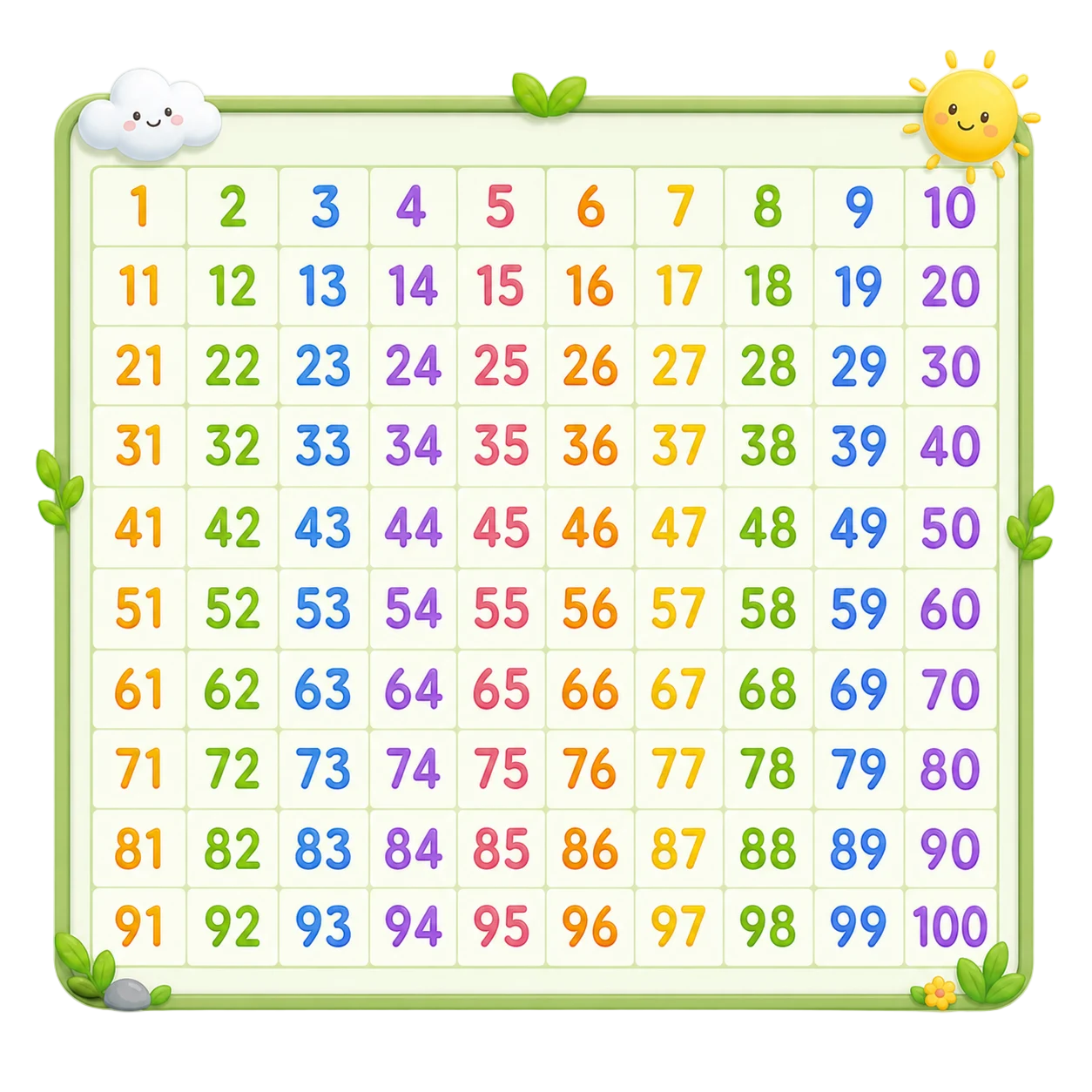
A standard hundreds chart has 10 rows and 10 columns, with numbers in order from 1 through 100. The app shows a section of the chart with one number revealed, and learners fill the remaining cells.
How it works
Begin with numbers to 20, then move to 40 and the complete 1–100 hundreds chart.
Locate its row and column, then use ±1 across and ±10 vertically to reason outward.
Complete the missing numbers, check the result, and use practice records to revisit completed sessions.
Common questions
Usually, yes. Both commonly mean a 10×10 number chart containing 1 through 100. You may also see the terms hundred chart, number chart 1–100, or 100 number chart.
Hundreds charts are widely used in kindergarten, first grade, and second grade. They are helpful when children are learning number sequence, place value, number sense, and addition or subtraction within 100.
Choose a difficulty and question count. The app shows part of a hundreds chart with one number revealed. The learner uses number patterns to fill the missing cells and then checks the result.
Yes. The “What Is a Hundreds Chart?” page includes a complete 1–100 chart image and an explanation of its basic patterns. The same reference is available from the app’s Help page.

Practice hundreds charts on a phone or tablet